 DevHeist
Candyland
A shop where customers build their own mix piece by piece, and the stock behind it always agrees with what the shop is selling.
An online sweet shop that sells by weight, by the piece and by the gift box — with a warehouse behind it that always agrees with the storefront.
What we delivered
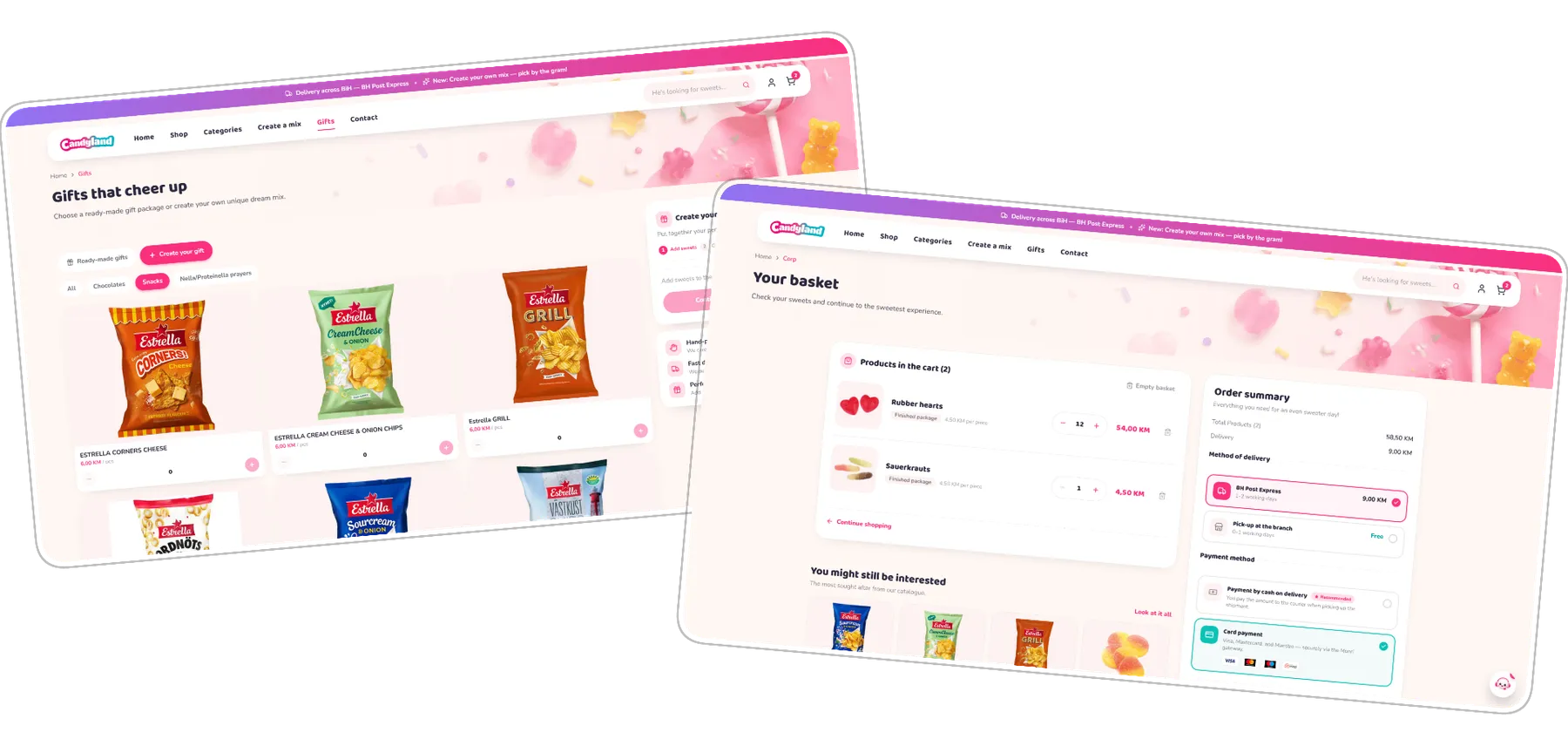
- The complete shop, end to end
- Storefront, staff panel and warehouse module
- Card payments and courier handover built in
Scope
Built for
- Customers ordering online, with or without an account
- Staff processing orders
- Warehouse and stock control
01 Overview
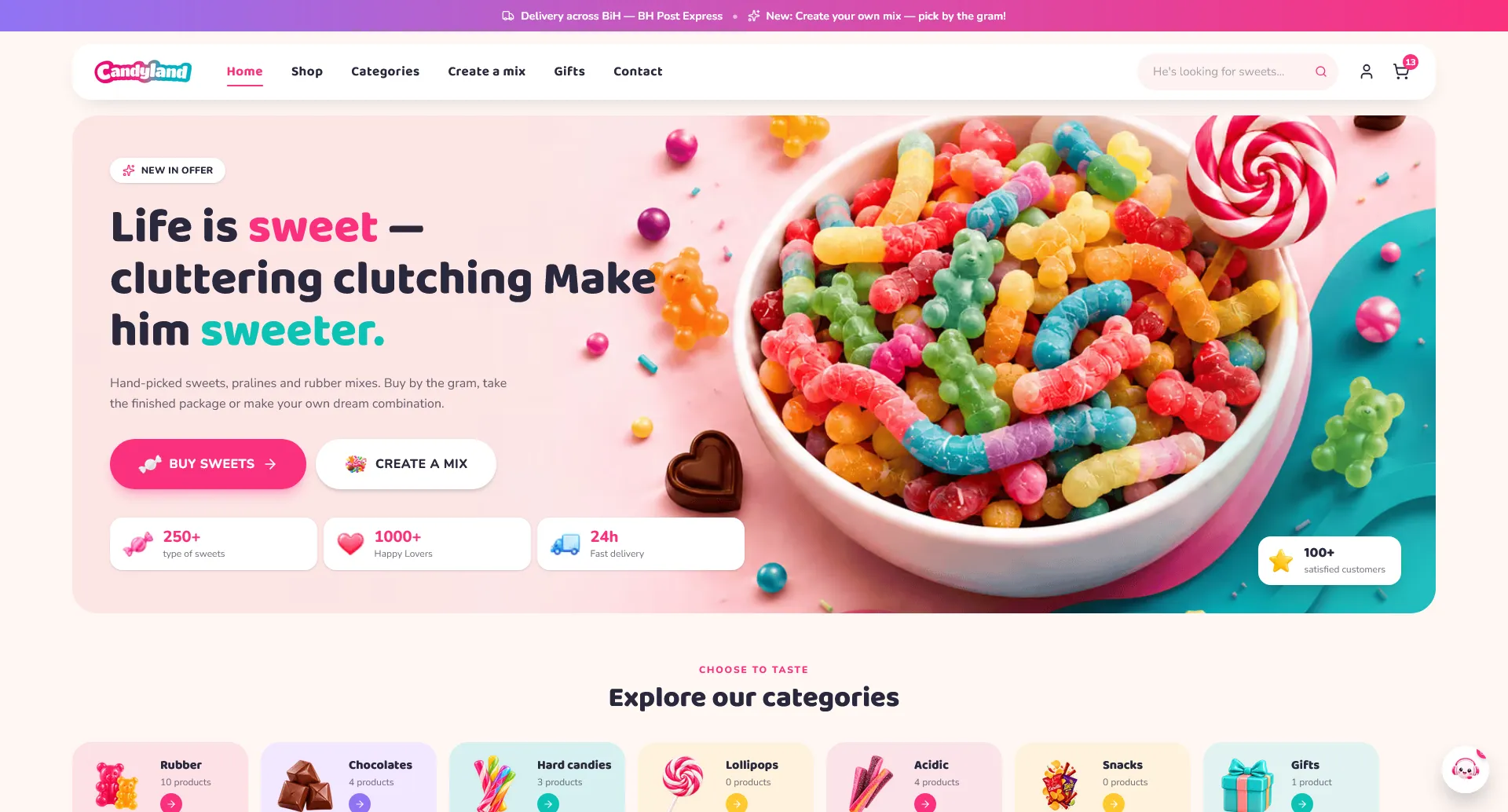
Candyland is a complete online shop for a confectioner — the storefront customers use, the panel staff work in, and the stock system that keeps the two honest.
Most shops know one way to sell: by the piece. A confectioner sells three — by the kilo, by the piece and as a finished gift box — and each one prices, counts and displays differently.
All three go through the same basket, the same order and the same stock ledger, so the business gets three ways to sell without three systems to reconcile.
02 The challenge
An off-the-shelf shop can list sweets. It cannot sell them the way a confectioner actually sells them.
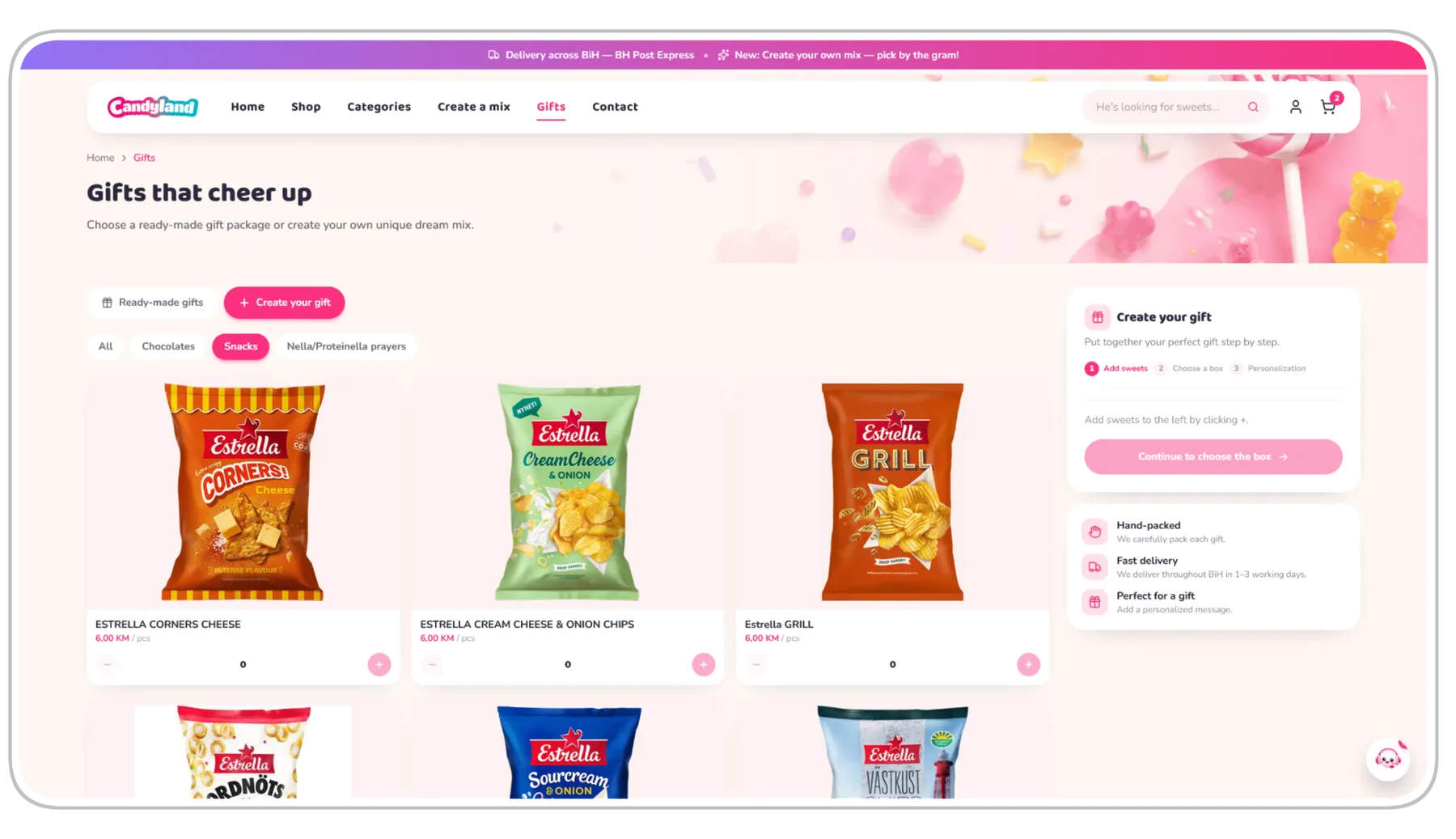
- 01 One range sold three ways — by weight, by the piece and as finished gift boxes
- 02 Customers who want to put together their own combination, not only pick a fixed package
- 03 A storefront that must never offer something that is not on the shelf
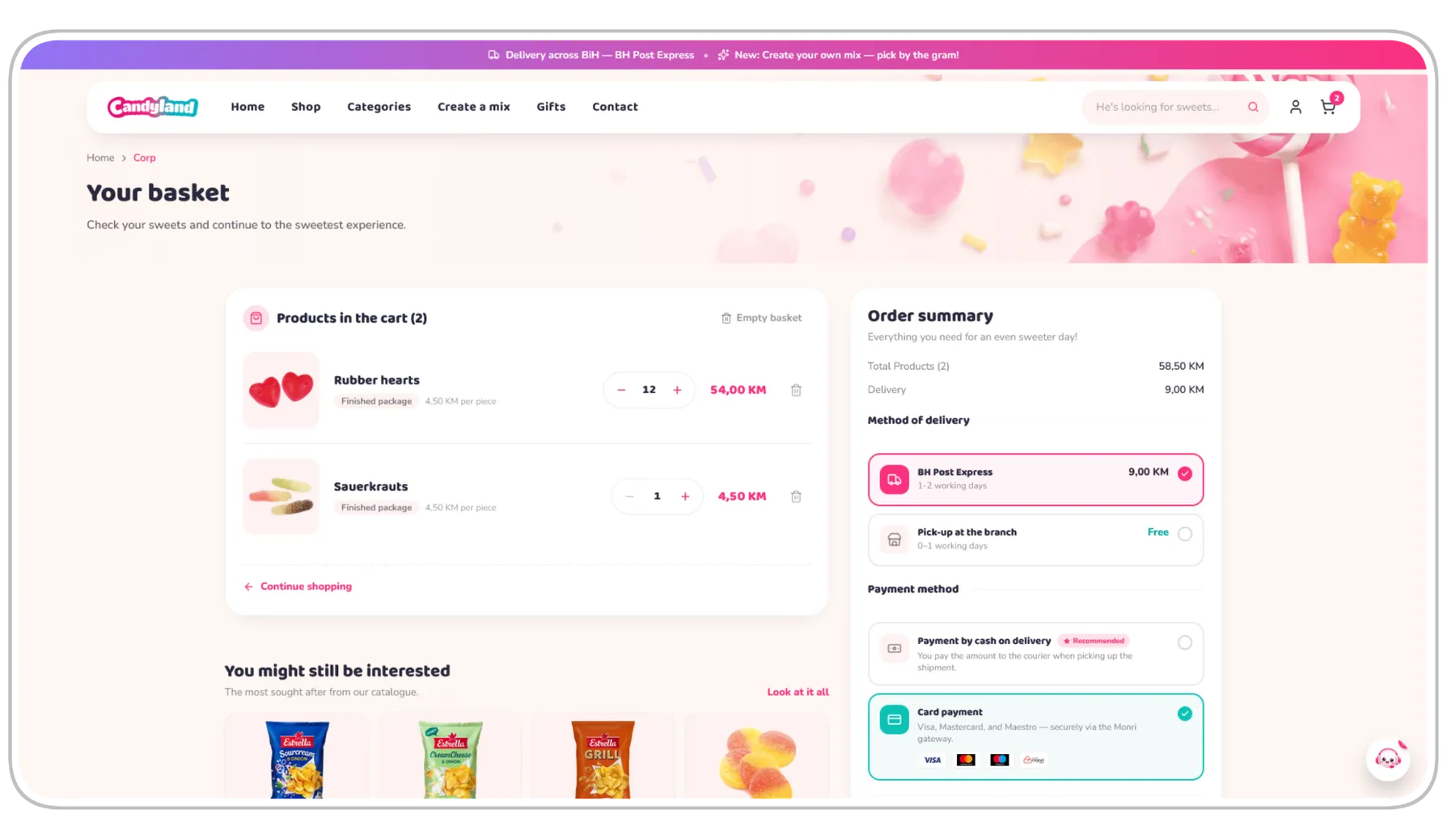
- 04 Payments and deliveries that have to move each order forward without staff watching over them
03 The solution
Three ways of selling, one checkout — and a stock figure that is the result of recorded movements rather than a number someone updated.
Weight, piece and gift box each carry their own pricing and stock rules, and all of them end up in the same basket and the same order.
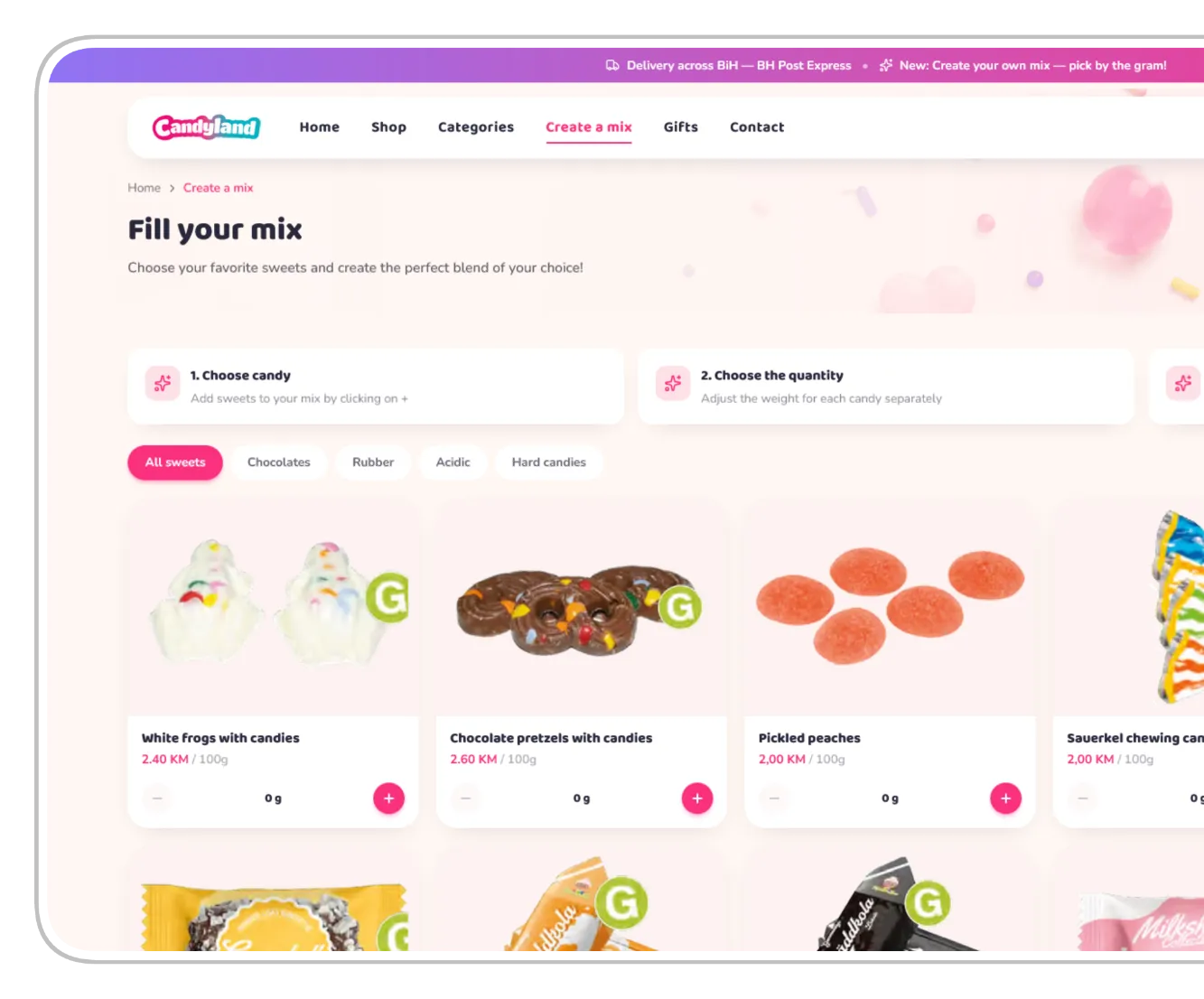
Customers build their own mix piece by piece, watching the weight and price update as they go, and a registered customer can save a mix and reorder it in one click.
Every receipt, sale, return, write-off, stock count and correction is recorded, so any difference between the shop and the shelf has a reason attached to it.
04 Key capabilities
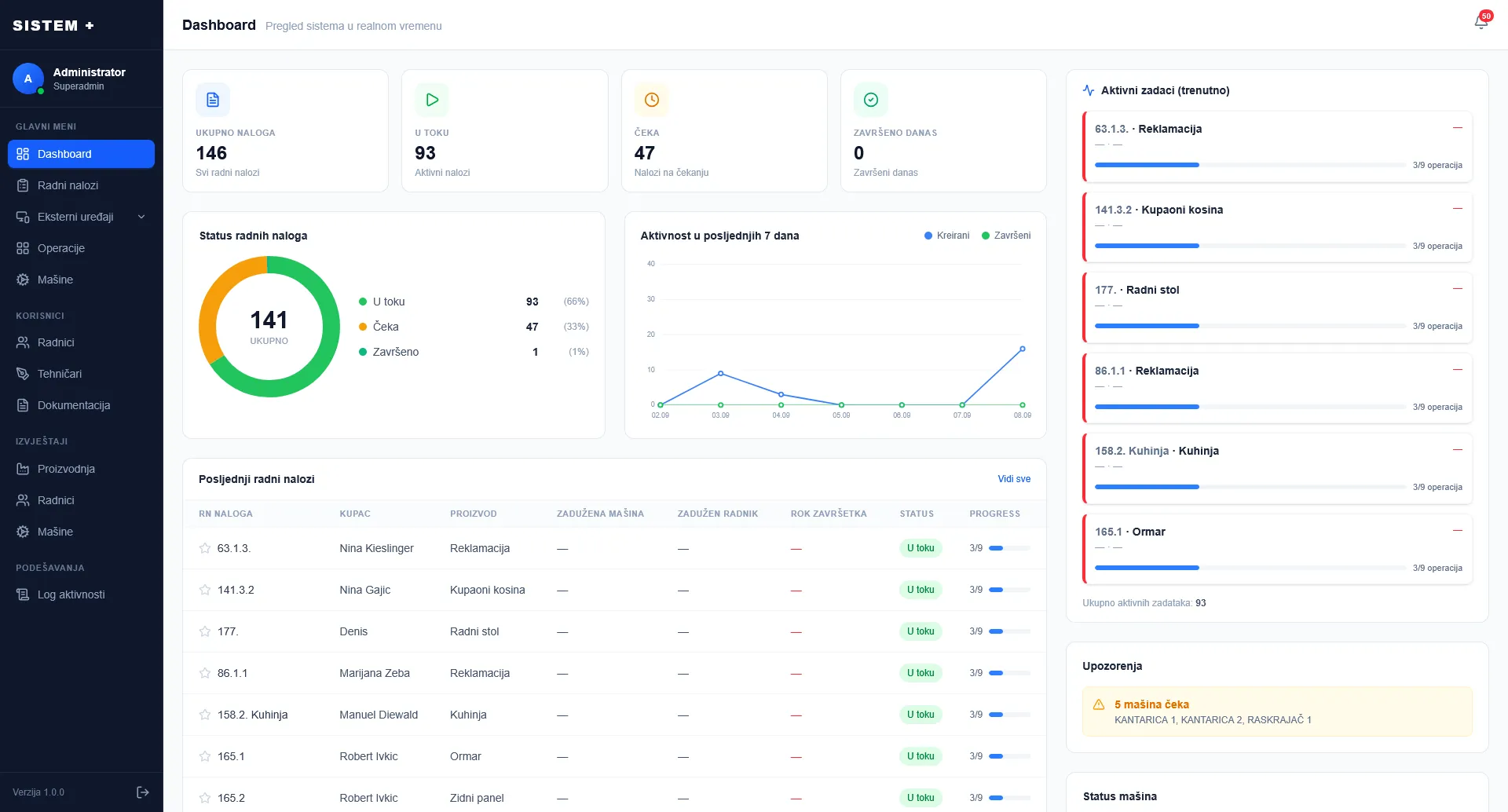
What it makes possible.
- 01
Three ways to sell, one basket
By the kilo with a choice of weight, by the piece, or as a finished gift box. Each prices and counts correctly, and all of them go through the same checkout.
- 02
A mix the customer builds
Sweets are chosen one at a time with the weight and the price updating live, and a saved mix can be ordered again with a single click.
- 03
Stock that explains itself
The figure on the product page is the result of every recorded movement behind it, not a number somebody remembered to change.
- 04
Payment that cannot go missing
Card details never pass through the shop, and each payment is confirmed by the provider directly rather than by the customer's browser — so closing the tab mid-payment costs nobody anything. Unpaid card orders cancel themselves and the goods return to stock.
- 05
Deliveries announced in one batch
Ready orders are handed to the courier together at a set time each day, and the address labels come back as a single file ready to print. Delivery status then moves the order along and emails the customer on its own.
- 06
A shop the owner can change
Homepage content, featured products, the notice bar, delivery charges, the free-delivery threshold and payment methods are all edited from the panel — no development work to change what the shop says or charges.
05 Business value
What changes for the business.
-
What the shop offers and what the warehouse holds stay in agreement.
-
Staff spend the day processing orders, not announcing shipments and chasing payment confirmations.
-
The range is sold the way the business actually sells it.
A shop built around how a confectioner really sells — by the gram, by the piece and by the gift.